Rate of Perceived Exertion
A subjective scale for measuring exercise intensity during [[Health/Exercise|Exercise]]
· 2 min read · budding
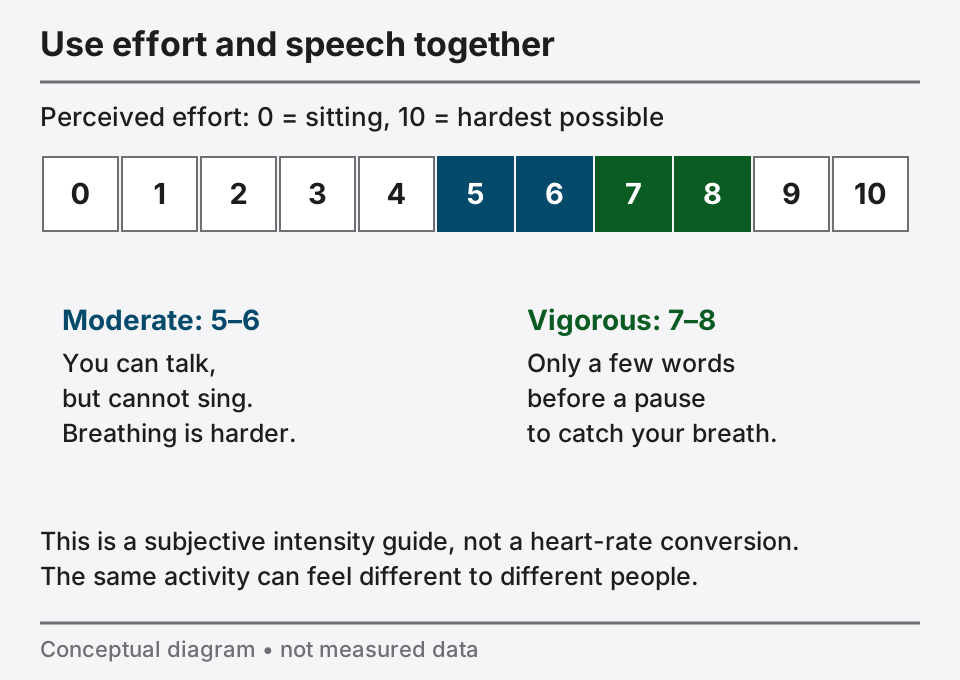
Rate of Perceived Exertion (RPE) is a subjective scale used to measure the intensity of physical activity. It helps individuals gauge their effort level during Exercise and adjust intensity appropriately.
The Scale
- 1-2: Very Light - Normal breathing, minimal effort
- 3-4: Light - Slightly increased breathing, can hold conversation
- 5-6: Moderate - Deeper breathing, still conversational
- 7-8: Vigorous - Heavy breathing, short phrases only
- 9-10: Maximum Effort - Cannot speak, complete exhaustion
Applications
- Helps track workout intensity without special equipment
- Useful for FITT principle implementation
- Supports progressive overload in training
- Aids in maintaining appropriate exercise intensity
Benefits
- Simple to understand and implement
- Requires no equipment
- Adaptable to any fitness level
- Helps prevent overtraining
Related Areas
- Exercise planning and progression
- FITT Principle implementation
- Wellness Journal tracking
Tip
Personal Calibration Your perception of effort may differ from others. Focus on consistency in your own ratings rather than comparing with others.
Linked from
- Exercise
Health/RPE - Rate of Perceived Exertion for intensity
- FITT Principle
Intensity: The level of effort during exercise, measured through perceived exertion or heart rate monitoring. Intensity should progressively increase as fitness improves.
- Progressive Overload
Adjust based on Rate of Perceived Exertion